
How to Choose the Right Emergency Exit Door: Aluminum vs Steel vs Stainless Steel
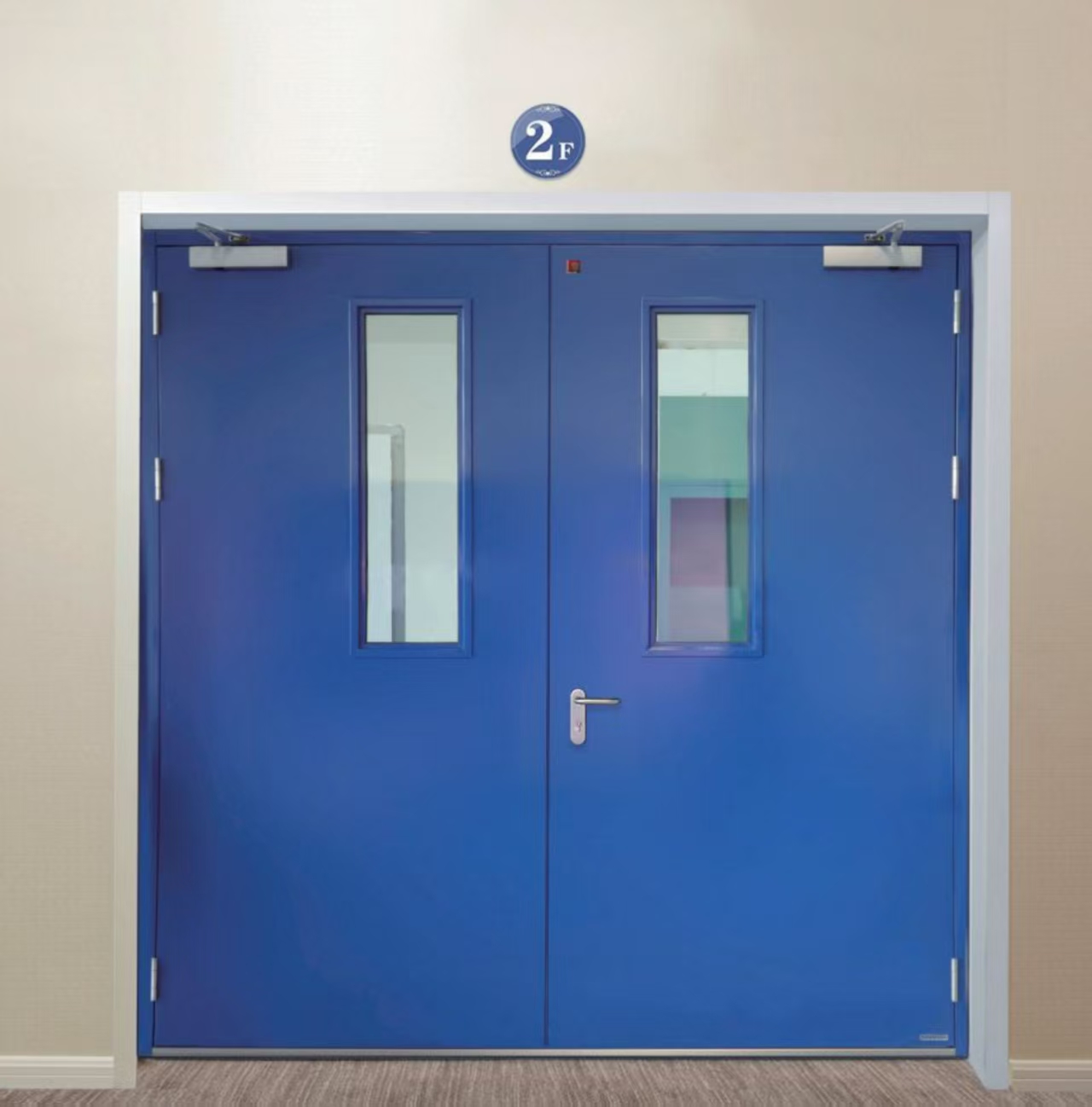
What Is an Emergency Exit Door?
An emergency exit door provides a designated route for people to leave a building quickly during an emergency. Depending on the building design and local code requirements, it may be equipped with panic exit hardware, push bars, door closers, locks, vision panels, smoke seals, signage and other safety components.
The terms emergency exit door, escape door, emergency escape door and fire exit door are often used together in commercial discussions. However, the technical requirement can differ from project to project. A door used on an escape route is not automatically a fire-rated door unless the complete door assembly has the required fire-resistance rating.
View Fire Rated Emergency Exit Door products Explore Fire & Safety Door Solutions
Why Door Material Matters
Material selection affects how an emergency exit door performs every day and during abnormal conditions. Weight influences opening force and hardware loading. Corrosion resistance affects service life. Surface finish affects the visual result. Fire and high-temperature performance determine whether a door can remain stable in demanding safety applications.
For commercial and industrial buyers, the best choice is rarely based on material name alone. The door leaf, frame, glazing, hardware, seals, closer, panic device and installation method should be considered as one complete system.
Aluminum vs Steel vs Stainless Steel Emergency Exit Doors
Aluminum, steel and stainless steel can all be used for emergency exit door projects, but they serve different priorities. Aluminum is lightweight and visually flexible. Steel is economical and structurally reliable. Stainless steel offers the strongest corrosion resistance and premium long-term durability.
| Comparison Point | Aluminum Exit Door | Steel Exit Door | Stainless Steel Exit Door |
|---|---|---|---|
| Weight and opening force | Lightest option, easier to open and suitable for frequent use areas. | Heavier than aluminum, with strong impact and wind-pressure resistance. | Heaviest option, requiring careful frame, hinge and hardware selection. |
| Fire and heat performance | Weaker at extreme heat unless engineered with suitable fire-resistant components. | Good structural stability and widely used for traditional fire door assemblies. | Excellent high-temperature stability when specified with suitable stainless steel grades and certified components. |
| Corrosion resistance | Good in normal atmospheric environments, but needs correct finish in coastal or chemical areas. | Depends on galvanizing, coating and maintenance; exposed steel may rust if finish is damaged. | Best corrosion resistance, especially for humid, coastal, chemical or wash-down environments. |
| Cost profile | Higher material cost, but lower handling and installation burden because of light weight. | Most economical and widely used for budget-sensitive projects. | Higher total cost, but often lower lifetime maintenance in harsh environments. |
| Appearance and maintenance | Good design flexibility with powder coating, anodizing or decorative finishes. | Practical industrial appearance; coating maintenance may be required over time. | Modern metal appearance with brushed or polished options and minimal routine maintenance. |
When to Choose an Aluminum Emergency Exit Door
An aluminum emergency exit door is useful when light operation, appearance and frequent daily use are important. The lower weight can reduce opening effort, which may be valuable in public buildings, schools, hospitals, retail areas, offices and other places with regular pedestrian movement.
Aluminum also supports flexible surface treatments and color matching. It can blend more easily with modern architectural facades and interior design schemes than heavier industrial door materials.
- Shopping malls, hotels and office buildings
- Hospitals, schools and public buildings
- Entrances where easy opening is a priority
- Projects needing a refined architectural appearance
When to Choose a Steel Emergency Exit Door
A steel exit door is often the most practical choice for general commercial and industrial projects. Steel provides strong structural performance, mature manufacturing processes and competitive pricing. For many standard stairwells, factories, warehouses, garages and service corridors, it gives a balanced result.
Steel doors should be properly finished with galvanizing, primer, powder coating or other surface protection according to the site environment. If the coating is damaged and moisture reaches the base metal, maintenance should be handled quickly to reduce corrosion risk.
View Fire Rated Door category Read the Fire Rated Door Buying Guide
When to Choose a Stainless Steel Emergency Exit Door
A stainless steel exit door is the preferred option where corrosion resistance, hygiene, long service life or premium appearance matters more than initial cost. Stainless steel performs well in coastal buildings, food facilities, chemical plants, wet rooms, clean areas and high-humidity environments.
Grades such as 304 and 316 stainless steel are commonly discussed for corrosion-resistant door projects. The correct grade should be selected according to salt exposure, cleaning chemicals, humidity and project standards.
- Coastal and high-humidity environments
- Food processing and wash-down areas
- Chemical or corrosive industrial sites
- Premium commercial entrances requiring a durable metal finish
Do You Need a Fire-Rated Emergency Exit Door?
A fire exit door used in an escape route may need a certified fire rating, but this depends on building use, wall rating, local regulations and the approved fire-safety design. The important point is that fire rating applies to the complete assembly, not only the door leaf material.
If a project requires a fire-rated emergency exit door, confirm the required rating, opening size, wall type, frame, glazing, closer, panic bar, lockset, seals and installation details before production.
How to Select the Right Door for Your Building
Before requesting a quotation, prepare the building type, opening size, indoor or outdoor location, expected traffic frequency, fire-rating requirement, corrosion exposure, preferred finish, hardware configuration and project location.
For B2B projects, a clear specification helps the supplier recommend the correct emergency exit door instead of guessing from a photo or size alone.
- Confirm whether a certified fire rating is required
- Measure clear opening width, height, wall thickness and frame condition
- Define hardware needs such as panic bar, closer, lock and access control
- Check exposure to moisture, salt, chemicals or frequent cleaning
- Balance initial budget with lifetime maintenance cost
Emergency Exit Door Solutions from Anjie Door
Anjie Door provides commercial and industrial door solutions for factories, warehouses, public buildings, parking areas, stairwells and safety exits. Emergency exit door systems can be configured according to material, opening size, fire-rating requirements, hardware, finish and installation environment.
To receive a more accurate recommendation, provide drawings or site photos together with opening dimensions, required quantity, door material preference, fire-rating requirement and hardware configuration.
Send an emergency exit door inquiry View Fire Rated Emergency Exit Door details
Conclusion
Aluminum, steel and stainless steel emergency exit doors each fit different project priorities. Aluminum is lightweight and attractive, steel is economical and widely used, and stainless steel is strongest for corrosion resistance and long-term durability.
The right choice depends on building use, fire-safety requirements, corrosion exposure, traffic frequency, hardware configuration, budget and expected service life. For safety-related openings, always evaluate the complete door assembly rather than selecting by material alone.
Fire Rated Emergency Exit DoorVIEW PRODUCTS