
Anjie Door Solution
Dust & Environment Control Door Solutions
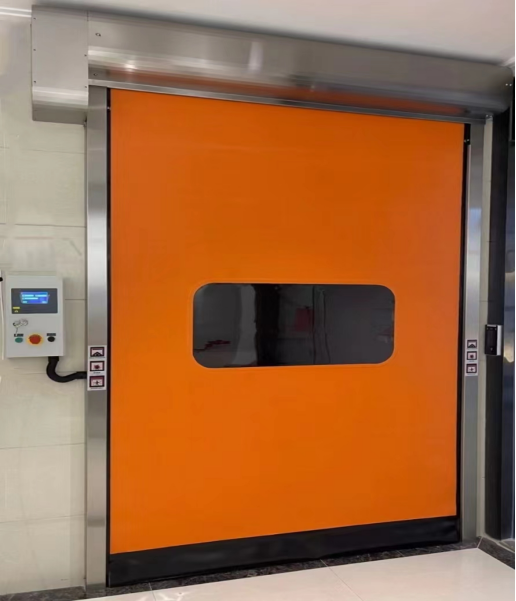
Factories, warehouses, food processing facilities, pharmaceutical plants, and controlled production environments often need to separate different working zones without slowing material flow. Anjie Door dust and environment control door solutions use high-speed operation, automatic control, suitable sealing, and application-specific door construction to reduce unnecessary exposure.
Key Challenges
Open industrial entrances can allow dust, airborne particles, insects, uncontrolled airflow, temperature differences, and outside contaminants to move between working zones.
Dust and Airborne Particles
Production, packaging, pharmaceutical, and warehouse zones may require separation between areas with different dust-control requirements.
Insects and Outside Air
Open entrances can allow insects and uncontrolled outside air into production or storage zones.
Humidity and Temperature Differences
Adjacent rooms may require airflow control to reduce unwanted humidity or temperature disturbance.
Cross-Zone Movement
Personnel, forklifts, and materials must keep moving while the door helps reduce exposure time.
Our Solution Strategy
Fast Closing
A high-speed door reduces the duration of each opening cycle, helping limit uncontrolled movement of air, dust, insects, and contaminants.
Automatic Control
Radar, pull cords, push buttons, access control, or vehicle detectors can activate the door only when needed.
Suitable Sealing
Door construction and sealing should match the environmental separation goal of each opening.
Interlocking Where Needed
Two automatic doors can be configured so both entrances do not remain open simultaneously in stricter separation zones.
Recommended Door Systems
High Speed PVC Doors
Flexible high-speed PVC doors are widely used for industrial environmental separation in production areas, warehouse passages, food processing zones, packaging rooms, workshops, and internal logistics routes.
- Fast operation
- Automatic closing
- Compact installation
- Multiple activation methods
- Frequent-cycle capability
High Speed Stacking Doors
For larger openings or areas exposed to stronger air pressure, stacking high-speed doors may provide additional stability.
- Industrial workshops
- Logistics buildings
- Large production entrances
- Exterior or semi-exterior passages
Rigid High Speed Doors
Where environmental separation must be combined with insulation and stronger physical protection, rigid high-speed spiral doors may be suitable.
- Rapid operation
- Rigid panels
- Better insulation
- Exterior entrance capability
- Improved security
Specialized Doors for Controlled Areas
Cleaner or hygiene-sensitive environments may need smooth surfaces, enhanced sealing, corrosion-resistant components, automatic sensors, or interlocking controls.
Typical Applications
Dust-Sensitive Production
Electronics production, packaging facilities, pharmaceutical production, precision manufacturing, warehouses, and assembly facilities can use high-speed doors to separate areas with different dust-control requirements.
Food and Hygiene Environments
Door systems can reduce insects entering production zones, minimize uncontrolled airflow, separate hygiene zones, reduce exposure time, and improve forklift flow.
Pressure and Airflow Separation
Fast-closing doors can help reduce pressure disturbance by limiting how long openings remain exposed.
Interlocking Door Systems
Selected food processing, pharmaceutical, temperature-controlled, or controlled production zones may use two-door interlocking logic.
How to Choose
Define the Control Objective
Clarify whether the main concern is dust, insects, odors, airflow, temperature difference, humidity, outside air, contamination, or cross-zone movement.
Review Opening and Traffic
Check opening dimensions, indoor or outdoor use, traffic frequency, forklift or personnel traffic, pressure difference, and wind conditions.
Select Activation and Safety
Choose radar sensors, pull cords, push buttons, remote controls, access control, or vehicle detectors, plus photocells, safety edges, light curtains, emergency stop, or warning lights.
Coordinate With Facility Systems
For more demanding pressure-controlled facilities, the door should be considered together with HVAC and building control systems.
Why Anjie Door
Anjie Door provides configurable industrial door solutions for factories and controlled environments.
Zone-Based Matching
We help match door types with different functional zones instead of applying one door specification throughout the building.
High-Speed Door Experience
Door systems can be configured for frequent-cycle operation, automatic activation, and environmental separation.
Project-Specific Controls
Sensors, interlocking logic, safety devices, and door construction can be selected according to the facility layout and control objective.
Related Applications
Related Solutions
FAQ
Can one industrial door create laboratory-level environmental control?
No industrial door creates laboratory-level environmental control by itself, but correctly selected door systems can be an important part of a facility's overall environmental management strategy.
Why are high speed doors useful for dust control?
A high speed door reduces the duration of each opening cycle, limiting the time that air, dust, insects, and contaminants can move between areas.
When is interlocking useful?
Interlocking can be useful where stricter environmental separation is required, such as selected food processing zones, controlled production facilities, pharmaceutical areas, or temperature-controlled areas.
What should be checked before selection?
Check what needs to be controlled, opening dimensions, traffic frequency, pressure or temperature difference, wind conditions, hygiene requirements, and required opening speed.
Request a Dust & Environment Control Solution
Provide information about your facility layout, door dimensions, traffic flow, environmental conditions, and control objectives. Anjie Door can recommend suitable dust and environment control door solutions based on the actual application.
- Facility layout
- Door dimensions
- Traffic flow
- Environmental conditions
- Control objectives
- Indoor or outdoor location
- Required activation method
- Safety requirements